Category: Holiday Metrics

  • Is Christmas Music Too Expensive to License for Sitcoms?

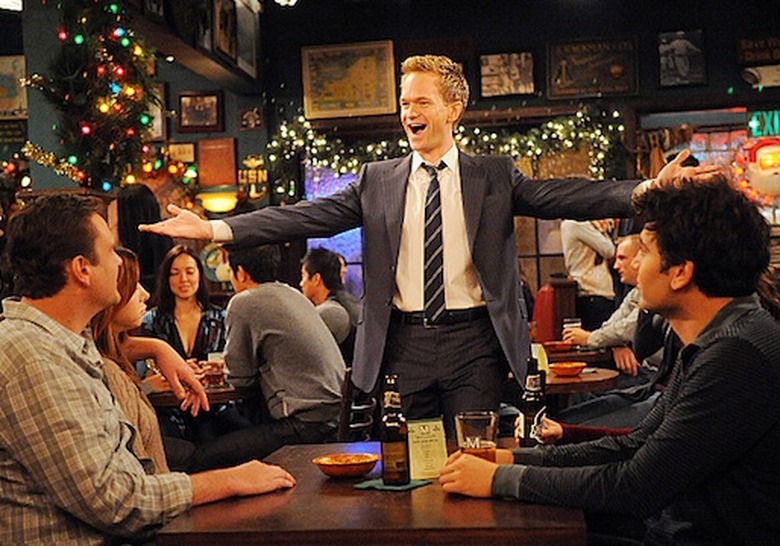
    “False Negative” — OSC of CBS’ HOW I MET YOUR MOTHER.
    Photo: Ron P. Jaffe/FOX.
    ©2010 FOX TELEVISION. All Rights Reserved.

    What This Project Set Out to Examine

    Christmas episodes are a long-standing sitcom tradition. Nearly every major network comedy of the past 30 years has produced multiple holiday-themed episodes, often using Christmas or other holidays as a narrative anchor for character conflict, sentimentality, or satire.

    This project was built to answer a simple question:

    How much Christmas music do sitcoms actually use?

    Rather than assuming that Christmas episodes are saturated with holiday songs, this analysis catalogued the actual music used in Christmas episodes across a sample of well-known sitcoms, tracking whether songs were:

    • licensed (commercial recordings)
    • public domain (traditional carols)
    • or absent altogether

    What the Data Actually Shows:

    To build this dataset, I started by manually reviewing episode music listings on Tunefind.com, a site that catalogs what songs appear in television episodes.

    I selected five well-known sitcoms spanning different eras and focused specifically on their Christmas episodes during periods when holiday-themed programming was most common, based on findings from my earlier analysis of Christmas episodes. For each episode, I recorded whether Christmas music appeared and whether those songs were licensed recordings or public-domain carols. I then wrote a small Python script to organize the data, calculate basic metrics (such as licensed versus public-domain usage), and generate visualizations to make patterns easier to compare across shows and time periods.
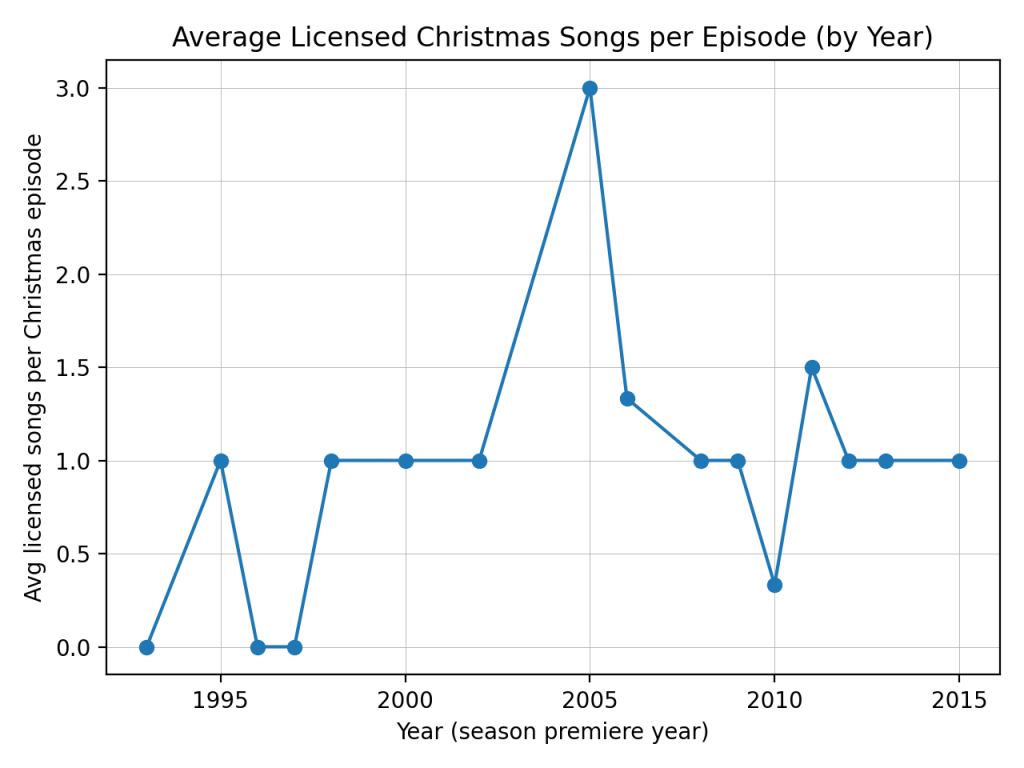
    Across major sitcoms analyzed — spanning the 1990s through the 2010s — one pattern is consistent:

    Most Christmas episodes use little to no Christmas music at all.

    Key observations from the spreadsheet:

    • Licensed Christmas songs appear infrequently, even in peak-era sitcoms.
    • Many Christmas episodes contain zero licensed holiday tracks.
    • When music is present, it is often:
      • public-domain carols
      • brief background cues
      • or isolated moments rather than sustained themes
    • Entire Christmas episodes often rely purely on dialogue, setting, and performance, not music, to signal the holiday.

    Importantly, this pattern holds across decades.
    The data does not show a sharp drop-off or collapse in music usage — it shows that Christmas music was never heavily used to begin with.

    Why This Matters (and Why Cost Alone Isn’t the Answer)

    The initial question — “Is Christmas music too expensive to license?” — is still valid, but the data suggests a more nuanced conclusion:

    Sitcoms largely chose not to rely on Christmas music, even when budgets were larger and licensing was easier.

    Several plausible explanations emerge:

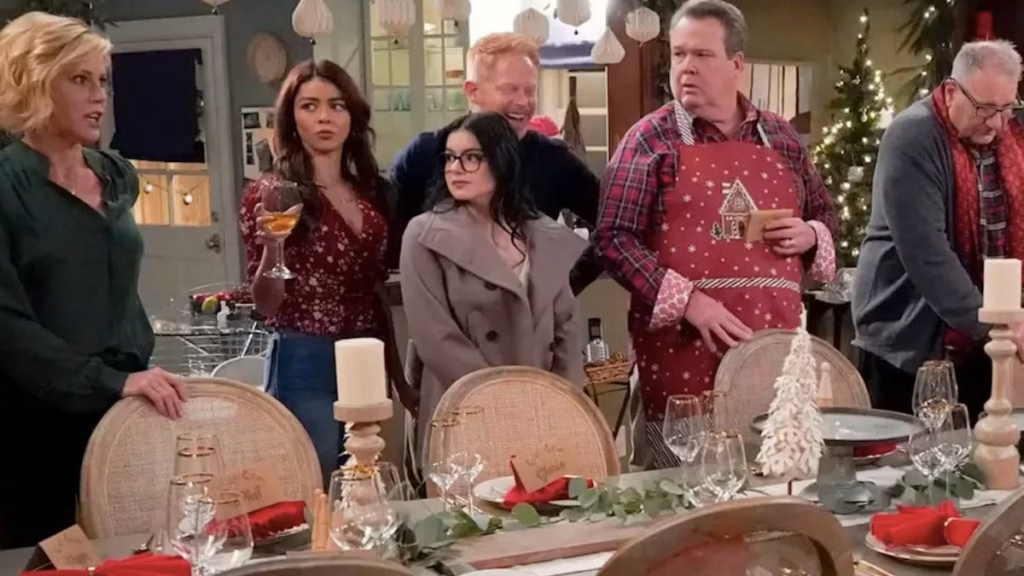
    1. Sitcoms Signal Christmas Visually, Not Musically

    Christmas episodes communicate the holiday through:

    • decorations
    • wardrobe
    • dialogue
    • plot structure (parties, family, end-of-year reflection)

    Music is optional, not essential. The holiday is already legible without it.


    2. Comedy Prioritizes Timing Over Atmosphere

    Unlike dramas, sitcoms are built around:

    • rapid dialogue
    • punchlines
    • awkward silence

    Continuous background music — especially familiar Christmas songs — can interfere with comedic timing or dilute jokes. Many sitcoms intentionally avoid music so the rhythm of the scene remains intact.


    3. Christmas Songs Are Culturally “Loud”

    Christmas music carries heavy emotional and cultural baggage. Using a well-known song can:

    • overwhelm a scene
    • inject sentiment the writers didn’t intend
    • pull attention away from character dynamics

    Avoiding music gives writers tighter control over tone and avoids the episode from being dated.


    4. Licensing Cost Reinforces an Existing Creative Preference

    Licensing costs may reinforce avoidance, but the data suggests they are not the root cause.

    Even when:

    • network budgets were higher
    • syndication economics were stronger
    • licensing environments were more permissive

    sitcoms still used very little Christmas music.

    In other words:

    Cost may explain why music didn’t increase — not why it was absent.


    How This Fits with the Broader RewindOS Christmas Analysis

    In our companion analysis on Christmas episodes and television health, we show that:

    • Christmas episodes remain common
    • but their function has changed

    This music analysis complements that finding:

    • Christmas episodes persist as narrative rituals
    • not as audio spectacles
    • music was never the core signal — the episode itself was

    The holiday survives on structure and story, not soundtrack and it doesn’t need music.


    Final, Data-Faithful Conclusion

    Sitcoms did not abandon Christmas music — they largely never relied on it in the first place.

    Across decades, networks, and formats, Christmas episodes consistently used minimal music, suggesting a long-standing creative norm rather than a modern cost-driven retreat.

    Licensing expense may discourage experimentation, but the evidence indicates that sitcoms have always treated Christmas music as optional.

    So the next logical question for us would be if certain dramas would choose a controversial christmas song to heighten the episode? Stay tuned to find out.

    If you want to see or run the Python script used for this analysis, the full repository is here:

    👉 GitHub: https://github.com/jjf3/rewindos-christmas-music-cost

  • What Christmas Episodes Reveal About the Health of U.S. Television

    A data-driven look at how Christmas-themed TV episodes rise and fall with industry confidence.

    Why I Built This

    This is the second project for rewindOS. This project is part of a short Christmas programming sprint designed to explore how holiday-themed television functions as a cultural signal rather than a novelty. I started with a simple question: Are Christmas episodes still as prevalent as they were during the era of long-running television shows? In earlier decades, holiday episodes were almost guaranteed milestones for successful series, so I wanted to understand how that tradition has changed in the modern TV landscape.

    The first step was to measure actual output specifically, and so I went to wikipedia to see if they had a list of Christmas Episodes for TV. They had an extensive list that was used for the dataset of this project. Then I used python coding to produce a graph for how many Christmas-themed television episodes were produced between 1947 and 2025, and looked at the downward spiral of shows from 2023-2025 and how that compares to earlier periods.

    From there, the sprint expands into a few focused, related experiments rather than a single large dataset.

    Next, I plan to track Christmas music usage within TV episodes, looking at which songs appear, how frequently music is used, and what types of Christmas music are favored. This portion will intentionally stay small, focusing on two to three well-known sitcoms, to keep the analysis tight and interpretable.

    The sprint will conclude with a beta test of a controversy index, applied to a Christmas-themed case study, as a way to explore how sentiment, cultural backlash, or reinterpretation can affect holiday media over time.

    All of these projects are designed to be completed within one to two weeks, serving as a focused seasonal experiment while also laying groundwork for broader RewindOS cultural analytics moving forward.

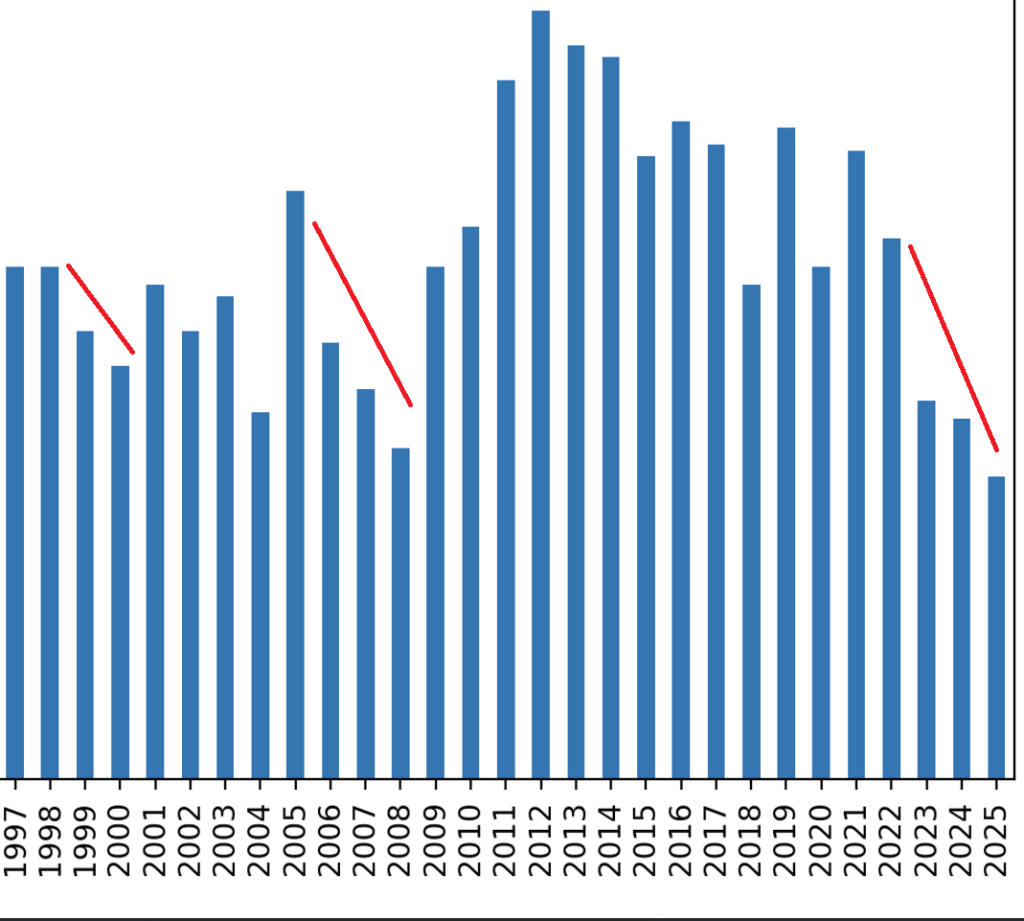
    Figure 1: Number of U.S. Christmas-themed television episodes by year (1947–2025), excluding standalone specials.

    When we chart U.S. Christmas-themed TV episodes over time (excluding standalone specials), we see that they begin appearing consistently in the 1950s, rise steadily, and then fluctuate in clear cycles. Major declines occur in 1998–2000, 2006–2008, and again starting in 2023. Notably, 2008 and 2025 mark the lowest levels of Christmas episodes in modern television, matching periods of industry instability. The most productive era was 2012–2023, driven by long-running, sitcoms with over 5 seasons.

    Expanding on what the data shows (so far)

    Using a filtered dataset of U.S. television Christmas-themed episodes (excluding standalone holiday specials and animation), several clear patterns emerge:

    🎄 Long-term rise, then contraction

    • Christmas-themed TV episodes begin appearing consistently in the 1950s, aligning with the rise of broadcast television and stable seasonal scheduling.
    • Prior to that, occurrences are sparse, with 1973 marking the lowest point for Christmas episodes in the modern TV era.

    Repeated contractions in Christmas episode production align with broader industry disruptions.

    📉 Structural dips repeat over time

    • Three periods show notable declines in Christmas episode production:
      • 1998–2000
      • 2006–2008
      • 2023–2025
    • These downturns closely resemble each other in magnitude and shape, suggesting recurring industry-wide contractions rather than random fluctuation.

    ❄️ Modern low points

    • 2008 and 2025 stand out as the lowest years for Christmas episodes in modern television, placing today’s output on par with the post-network-era shock of the 2008 Writers’ Strike period.
    • The current decline beginning in 2023 suggests a sustained trend rather than a single anomalous year.

    📈 Peak era: 2012–2023

    • The years 2012 through 2023 represent the highest sustained production of Christmas-themed episodes.
    • This era is largely fueled by:
      • Highly successful, long-running sitcoms
      • Large ensemble casts
      • Stable season orders (22 Episodes ftw!!!!)
      • Continued contribution from U.S. animation (even when animation is excluded from the core count, its ecosystem supports the broader trend)

    This period reflects an industry confident in long arcs, recurring characters, and calendar-based “event episodes.”

    Long-running ensemble sitcoms dominated the peak era of Christmas television episodes (2012–2023).

    Christmas episodes function as a high-confidence production choice:

    • They assume a show will still be on the air in December
    • They reward audience loyalty
    • They often require additional budget, music licensing, and scheduling certainty

    Their decline aligns with periods of:

    • Shorter seasons
    • Higher show churn
    • Platform fragmentation
    • Labor disruption or industry uncertainty

    This suggests that Christmas episodes may act as a proxy indicator for scripted TV stability, not just seasonal nostalgia.

    This data in no way shape or form indicates that there is an overall agenda driven message surrounding Christmas itself on TV. It just shows that there is a decline in Television confidence in general and so holiday themed episodes are either cut or don’t make sense when a show doesn’t have 22 episodes or won’t be around during the holidays.

    My original thought going into this project was that the years 2020-2025 would show a major decrease but as you can see 2023 had a high output of Christmas themed episodes.

    If you want to see or run the Python script used for this analysis, the full repository is here:

    👉 GitHub: https://github.com/jjf3/Rewindos-Christmas-Episodes