Tag: python

  • Severance and the Math of Cultural Safety

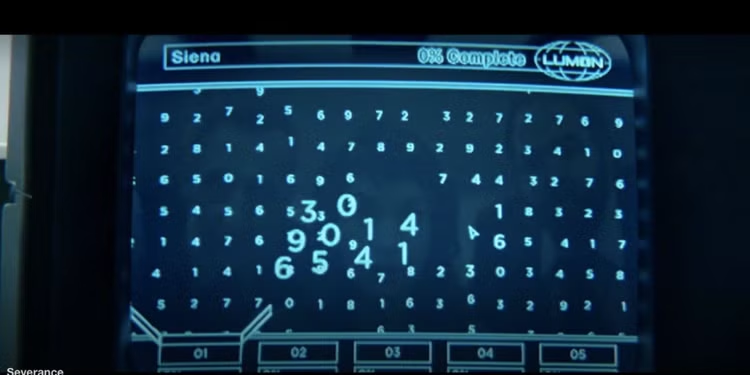
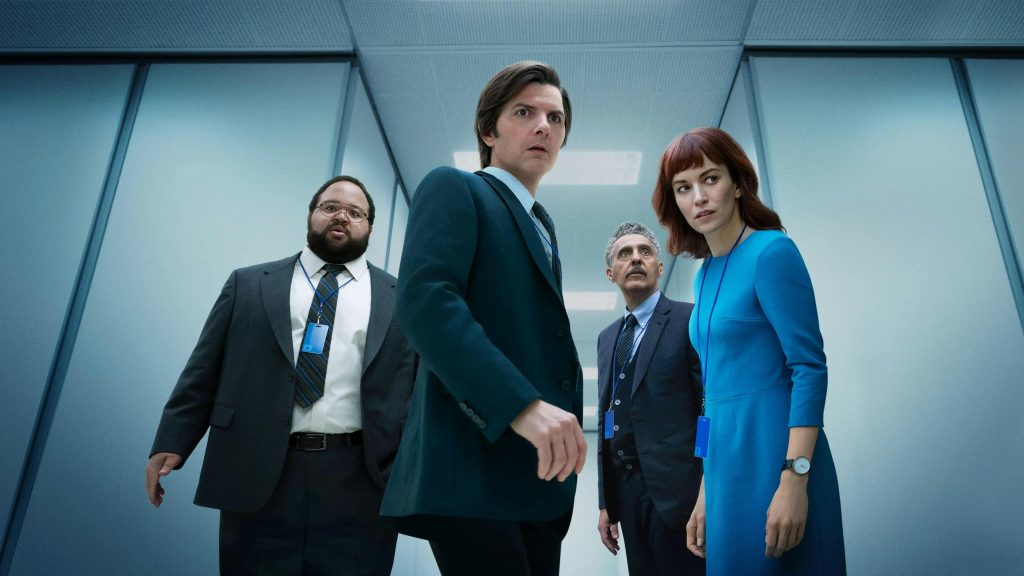
    When Severance used “Baby It’s Cold Outside” in Season 2, Episode 7 (Chikhai Bardo), which aired February 28, 2025, the choice looked controversial only if you froze time in 2018.

    If you remember there was a very brief controversy in 2018 framed around consent, radio pullbacks, and an outsized media backlash narrative.

    At RewindOS we don’t know if the team over at Apple TV refined their data in this structured way or if indeed the 2018 controversy ever even came up in the writer’s room or the legal department.

    So with that being said this project set out to answer a simple question:

    By late February 2025, was this song actually risky to use?

    My original thought was no. Not only was it not risky to use, but nobody had even mentioned it after the episode aired, and if you sort through the various subreddits run by eagle-eyed severance fans who discuss all things Severance in very detailed posts, you will get an idea of where I am going with this, how I got there, and how it can be recreated for just about any type of RewindOS Cultural Safety Framework that I will be developing to apply to other shows, quotes, actors, or songs.

    How I built this:

    This analysis draws on two independent signals to assess whether “Baby It’s Cold Outside” remained culturally risky by the time Severance aired in 2025.

    1. Google Trends: Controversy Decay

    Search interest was tracked for multiple controversy-framed queries related to the song from 2018 through 2025. using manual searches and then a larger python code. The data shows:

    • a clear but small peak during the 2018 radio pullback news cycle
    • rapid decay in the months that followed
    • no secondary spikes or resurfacing in subsequent years

    By 2020, controversy-related search interest had returned to baseline and remained there through 2025.

    2. Reddit: Social Engagement & Backlash Check

    Reddit posts were collected using public JSON search endpoints across within a python code that produced the following outputs:

    • broad references to the song and Severance / Apple TV
    • narrow “backlash” framings (e.g., banned, problematic, controversy)
    • subreddits where this discussion would be most likely to appear

    Weekly aggregation shows effectively no sustained discussion following the episode’s release. Only one post referenced the song in connection with Severance, and it discussed narrative tension rather than offense.

    The absence of engagement is itself the result. I was surprised to see the one post which featured the song as part of a long implied consent piece but this post did not show until March 6, 2025 a week after the episode aired and the post itself only generated three comments of discussion none about the song itself.

    Again, Whether or not Apple TV explicitly modeled this risk, guessed, or just didn’t care. We don’t know, but the outcome reflects what the data already showed and how others can use it. This is what cultural data intelligence looks like when measured instead of guessed.

    If you want to see or run the Python script used for this analysis, the full repository is here:

    👉 GitHub: https://github.com/jjf3/rewindos_measuring_cultural_safety

    📄 Download the White Paper here: https://www.rewindos.com/index.php/white-papers/the-rewindos-cultural-safety-framework/

  • Is Christmas Music Too Expensive to License for Sitcoms?

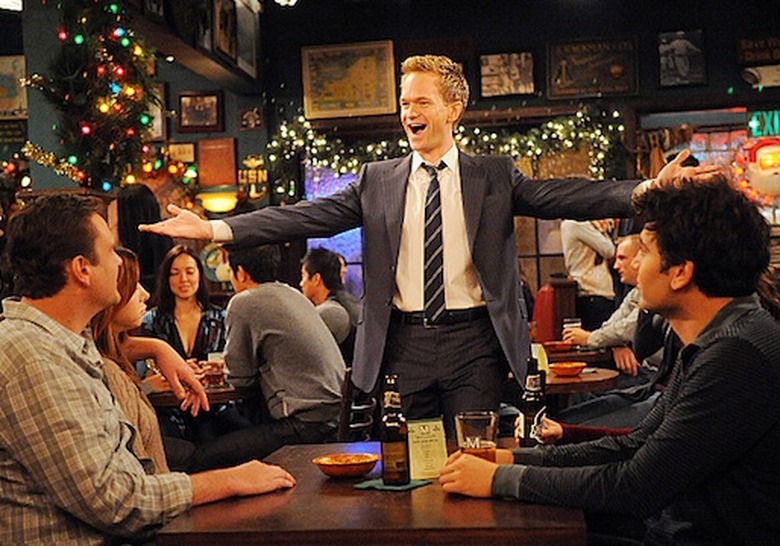
    “False Negative” — OSC of CBS’ HOW I MET YOUR MOTHER.
    Photo: Ron P. Jaffe/FOX.
    ©2010 FOX TELEVISION. All Rights Reserved.

    What This Project Set Out to Examine

    Christmas episodes are a long-standing sitcom tradition. Nearly every major network comedy of the past 30 years has produced multiple holiday-themed episodes, often using Christmas or other holidays as a narrative anchor for character conflict, sentimentality, or satire.

    This project was built to answer a simple question:

    How much Christmas music do sitcoms actually use?

    Rather than assuming that Christmas episodes are saturated with holiday songs, this analysis catalogued the actual music used in Christmas episodes across a sample of well-known sitcoms, tracking whether songs were:

    • licensed (commercial recordings)
    • public domain (traditional carols)
    • or absent altogether

    What the Data Actually Shows:

    To build this dataset, I started by manually reviewing episode music listings on Tunefind.com, a site that catalogs what songs appear in television episodes.

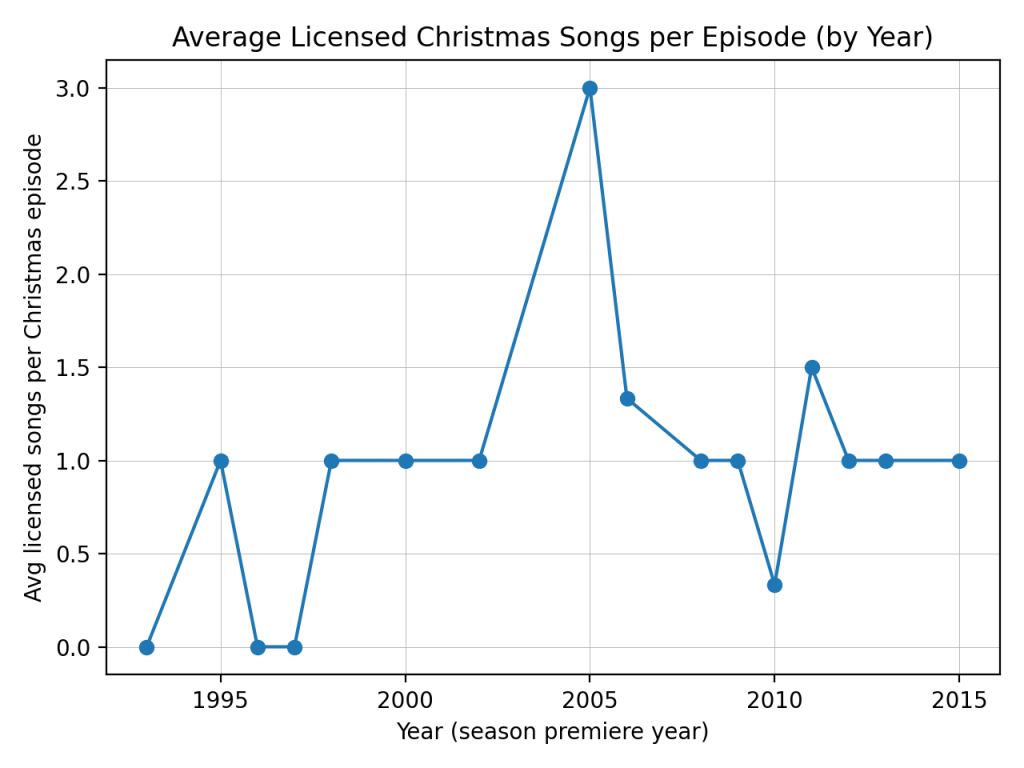
    I selected five well-known sitcoms spanning different eras and focused specifically on their Christmas episodes during periods when holiday-themed programming was most common, based on findings from my earlier analysis of Christmas episodes. For each episode, I recorded whether Christmas music appeared and whether those songs were licensed recordings or public-domain carols. I then wrote a small Python script to organize the data, calculate basic metrics (such as licensed versus public-domain usage), and generate visualizations to make patterns easier to compare across shows and time periods.

    Across major sitcoms analyzed — spanning the 1990s through the 2010s — one pattern is consistent:

    Most Christmas episodes use little to no Christmas music at all.

    Key observations from the spreadsheet:

    • Licensed Christmas songs appear infrequently, even in peak-era sitcoms.
    • Many Christmas episodes contain zero licensed holiday tracks.
    • When music is present, it is often:
      • public-domain carols
      • brief background cues
      • or isolated moments rather than sustained themes
    • Entire Christmas episodes often rely purely on dialogue, setting, and performance, not music, to signal the holiday.

    Importantly, this pattern holds across decades.
    The data does not show a sharp drop-off or collapse in music usage — it shows that Christmas music was never heavily used to begin with.


    Why This Matters (and Why Cost Alone Isn’t the Answer)

    The initial question — “Is Christmas music too expensive to license?” — is still valid, but the data suggests a more nuanced conclusion:

    Sitcoms largely chose not to rely on Christmas music, even when budgets were larger and licensing was easier.

    Several plausible explanations emerge:

    1. Sitcoms Signal Christmas Visually, Not Musically

    Christmas episodes communicate the holiday through:

    • decorations
    • wardrobe
    • dialogue
    • plot structure (parties, family, end-of-year reflection)

    Music is optional, not essential. The holiday is already legible without it.


    2. Comedy Prioritizes Timing Over Atmosphere

    Unlike dramas, sitcoms are built around:

    • rapid dialogue
    • punchlines
    • awkward silence

    Continuous background music — especially familiar Christmas songs — can interfere with comedic timing or dilute jokes. Many sitcoms intentionally avoid music so the rhythm of the scene remains intact.


    3. Christmas Songs Are Culturally “Loud”

    Christmas music carries heavy emotional and cultural baggage. Using a well-known song can:

    • overwhelm a scene
    • inject sentiment the writers didn’t intend
    • pull attention away from character dynamics

    Avoiding music gives writers tighter control over tone and avoids the episode from being dated.


    4. Licensing Cost Reinforces an Existing Creative Preference

    Licensing costs may reinforce avoidance, but the data suggests they are not the root cause.

    Even when:

    • network budgets were higher
    • syndication economics were stronger
    • licensing environments were more permissive

    sitcoms still used very little Christmas music.

    In other words:

    Cost may explain why music didn’t increase — not why it was absent.


    How This Fits with the Broader RewindOS Christmas Analysis

    In our companion analysis on Christmas episodes and television health, we show that:

    • Christmas episodes remain common
    • but their function has changed

    This music analysis complements that finding:

    • Christmas episodes persist as narrative rituals
    • not as audio spectacles
    • music was never the core signal — the episode itself was

    The holiday survives on structure and story, not soundtrack and it doesn’t need music.


    Final, Data-Faithful Conclusion

    Sitcoms did not abandon Christmas music — they largely never relied on it in the first place.

    Across decades, networks, and formats, Christmas episodes consistently used minimal music, suggesting a long-standing creative norm rather than a modern cost-driven retreat.

    Licensing expense may discourage experimentation, but the evidence indicates that sitcoms have always treated Christmas music as optional.

    So the next logical question for us would be if certain dramas would choose a controversial christmas song to heighten the episode? Stay tuned to find out.

    If you want to see or run the Python script used for this analysis, the full repository is here:

    👉 GitHub: https://github.com/jjf3/rewindos-christmas-music-cost

  • The “Biggest of All Time”: A Tiny RewindOS Prototype

    Why I Built This

    This is the first mini-project for RewindOS and it started with a simple question:

    When I watched the latest season of Prehistoric Planet Season 3: Ice Age, I noticed that Tom Hiddleston who recently replaced the late great David Attenborough as the narrator, said some variation of “the biggest of all time,” quite a lot. So I set off to determine how many times without using my fingers to count it like the cavemen did in those prehistoric times.

    It turns out with a little reverse engineering and hacking, this is quite easy and it highlights a metric that nobody in Hollywood seems interested in measuring— yet.

    If you watch a lot of nature documentaries, you probably notice recurring superlatives—“the largest ever discovered,” “the biggest predator of its era,” “the strongest bite force in history.” These phrases shape how we interpret both animals and storytelling. They’re a mix of science communication and spectacle.

    So I wanted to answer a playful but data-driven question:

    How frequently does the show in season 3 use the phrase “of all time,” and in what contexts?

    This became a perfect first test for RewindOS, because it touches everything I envision this project will be and ultimately do at scale:

    • extracting structured data from media
    • analyzing linguistic patterns
    • building repeatable pipelines
    • archiving, visualizing, and tracking cultural tendencies in media

    How I Got the Subtitles

    I already had the Season 3 video files. Thanks to my automated plex setup. So logically, I first went to my plex library and tried to extract the files that way.

    However, I see in plex after some basic research and simple ls linux commands on my server that they were nowhere to be found readily available for extract in my system. Lo and behold further research proved my point:

    Subtitles downloaded by Plex itself are stored inside of Plex’s blob files and aren’t able to be interacted with, nor can the location be changed.

    Chatgpt gave me some helpful but rather tedious “legal” ways to obtain the subtitles by recording them on VLC/Plex as it plays. However after some more research I discovered VLC’s VLSub feature which can download the embedded files. Success!

    This gave me five .srt files I needed — one for each episode.

    Those files became the dataset for the project.

    Not being a scratch programmer and now deeply entrenched into the era of AI, the next logical step was to build the python script.

    The entire analysis pipeline was built using AI as a collaborator.

    I described the problem (“Find all phrases ending in of all time in the SRT files”), and the model generated a clean Python script that:

    1. Walks through my subtitle directory
    2. Reads every .srt file
    3. Uses a regex pattern to capture the phrase + its context
    4. Prints them to the console
    5. Exports everything into a structured CSV

    The core of the extraction logic was this:

    pattern = re.compile(
        r"(\b\w+(?:\W+\w+){0,6}\W+of all time\b)",
        re.IGNORECASE
    )
    

    This lets the script capture phrases like:

    • “largest predators of all time
    • “one of the most powerful hunters of all time
    • “the biggest terrestrial bird of all time

    The final output CSV includes:

    • which episode
    • the snippet of text
    • how many instances appear across the season

    This is exactly the kind of small linguistic dataset that RewindOS will eventually let creators, journalists, and analysts explore effortlessly.

    It’s easy to laugh at how often nature docs use hyperbole, but those phrases shape cultural impressions of extinct animals. They’re part of storytelling tradition. Being able to quantify them is the first step in understanding patterns across eras, genres, studios, and creators.


    If you want to see or run the Python script used for this analysis, the full repository is here:

    👉 GitHub: https://github.com/jjf3/prehistoric-planet-of-all-time-analysis